



Sales Basics
• 9 - 10 mins readSignal-Based Outreach in 2026: How SDR Teams Should Use Buying Signals to Book More Meetings

Published December 30, 2025
Published December 30, 2025
Outbound used to be simple.
Build a list.
Write a sequence.
Hit send.
Hope for replies.
That approach doesn’t work anymore.
In 2026, inboxes are crowded, buyers are distracted, and SDR teams are expected to generate pipeline faster than ever without spamming the market or burning out.
This is exactly why signal-based outreach has become one of the most effective outbound strategies today.
Instead of asking, “Who should I reach out to today?”
High-performing SDR teams ask, “Who is showing signs they might actually want to talk right now?”
This guide focuses specifically on signal-based outreach, which is one of the most powerful tactics inside a modern sales engagement strategy.
If you’re looking for a broader overview of sales engagement, tools, multi-channel workflows, cold calling, and 2026 trends, start with our complete guide to sales engagement for modern teams.
Signal-based outreach is an outbound approach where SDRs prioritize prospects based on real buying signals, instead of static lists.
A signal is any action or event that suggests:
Instead of reaching out to hundreds of random prospects, SDRs focus on a smaller set of accounts that are more likely to respond right now.
The goal isn’t more activity.
The goal is better timing and relevance.
There are three big reasons this approach matters now more than ever.
Everyone is emailing.
Everyone is automating.
Everyone is “following up.”
Generic outbound blends into background noise.
Prospects expect you to understand their role, their timing, and their situation. If you don’t, they ignore you.
Most SDRs don’t fail because they don’t work hard, they fail because they spend time on the wrong accounts.
Signal-based outreach fixes all three problems.
Traditional outbound looks like this:
Signal-based outbound looks like this:
In 2026, the second approach wins every time.
Not all signals are equal.
Some are noise.
Some are gold.
Here are the signals that actually move the needle.
When a company starts hiring SDRs, AEs, RevOps, or sales leaders, it usually means:
Why this works:
Hiring creates operational pain and pain opens conversations.
Example outreach:
“Saw you’re growing the sales team teams at this stage often rethink how they manage outbound consistency. Curious how you’re handling it right now?”
Fresh funding creates urgency.
Most companies spend heavily in the first 60–90 days after a raise:
Example outreach:
“Congrats on the recent funding. Teams usually focus on scaling pipeline quickly after a raise is outbound something you’re reviewing this quarter?”
A new Head of Sales or VP of Revenue often means:
Example outreach:
“Saw you recently stepped into the role congrats. Many new sales leaders start by tightening outbound workflows. Is that on your roadmap?”
If someone visits:
They’re warming up, even if they don’t fill out a form.
Timing matters more than volume.
When a company changes or adds:
…it often signals growth or internal change.
Example outreach:
“Noticed your team recently updated parts of your sales stack, teams often review engagement workflows around the same time.”
Prospects often say exactly what they’re struggling with on:
This is self-reported intent; one of the strongest signals you can get.
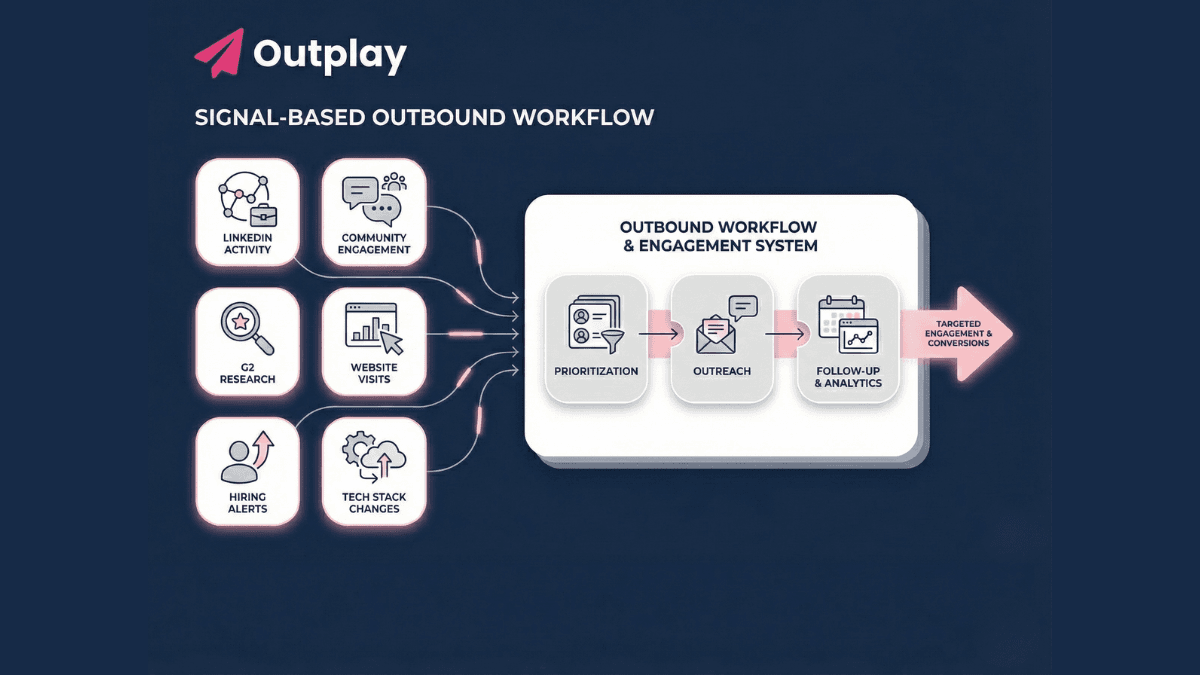
Buying signals don’t appear magically. In 2026, SDR teams rely on a mix of platforms to surface these signals in real time and turn them into actionable outreach.
Below are some of the most common tools teams use to detect different types of signals without needing a massive tech stack.
LinkedIn is still one of the richest sources of outbound signals if used properly.
SDRs commonly track:
While LinkedIn signals are mostly manual, they’re extremely valuable because they’re public, contextual, and human.
Many teams combine LinkedIn monitoring with sales engagement platforms so relevant signals quickly turn into follow-ups and tasks.
G2 provides visibility into companies actively researching tools within specific categories.
Common signals include:
These signals are especially useful for:
RB2B is commonly used for identifying:
These signals are ideal for trigger-based outbound, where SDRs reach out shortly after a meaningful change occurs inside the organization.
RB2B signals work best when paired with structured outreach workflows so timing doesn’t get lost.
Community platforms like Common Room surface signals from:
These signals help teams identify:
This is particularly useful for PLG, developer-focused, or community-led growth motions.
Many teams also rely on website and content engagement signals, such as:
These signals indicate active curiosity, even if the buyer hasn’t filled out a form yet. When combined with signal-based outreach, SDRs can follow up while interest is still fresh.
It’s important to note:
Tools surface signals they don’t book meetings.
Signals only create value when they:
This is why high-performing teams connect signal tools with a sales engagement platform so signals automatically turn into tasks, sequences, calls, and follow-ups. Once signals are identified, the next step is using them correctly without overwhelming SDRs or overengineering the process.
Signal-based outreach fails when teams try to track everything.
High-performing teams keep it simple.
Choose 5–7 signals that strongly align with your ICP.
Signals should trigger:
Signals without action are useless.
Signals guide context, not long explanations. One relevant line is enough.
Signals alone don’t book meetings.
Execution does.
A modern sales engagement platform helps SDR teams turn buying signals into action by automating multi-channel sequences, calls, and follow-ups without relying on manual work.
Instead of SDRs reacting manually, the system guides daily execution.
That’s how signal-based outreach scales.
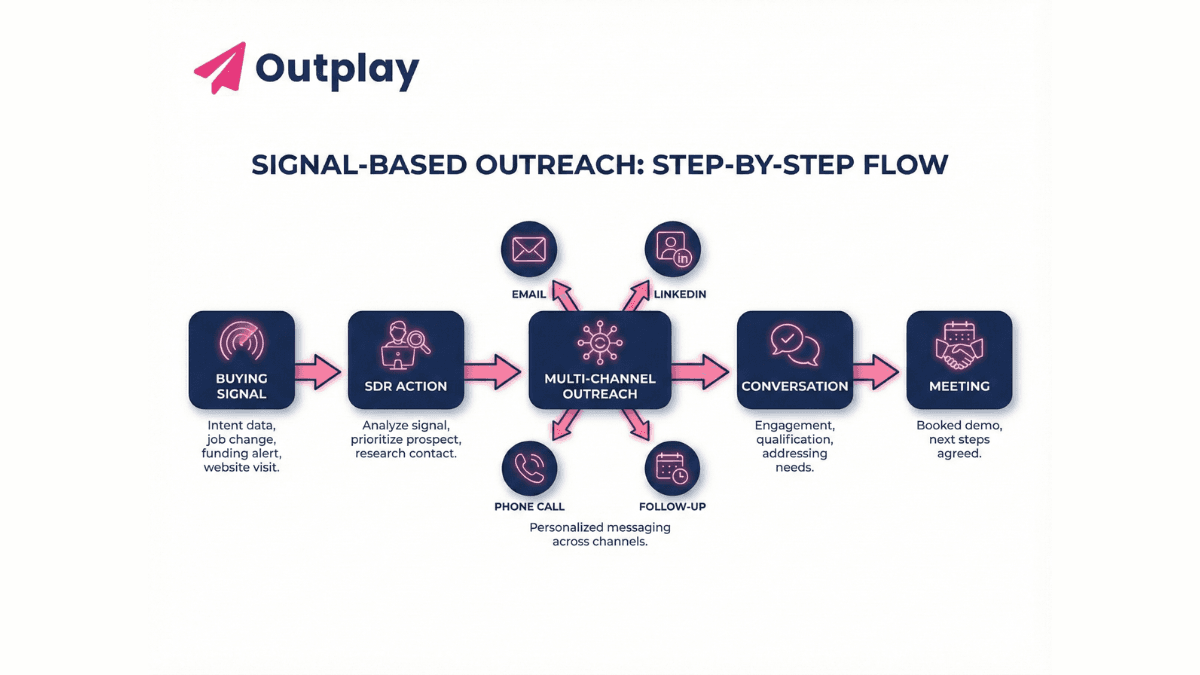
Here’s a simple, effective workflow:
No guessing.
No random lists.
No wasted effort.
Signals increase relevance.
Multi-channel increases visibility.
When signals are combined with a strong multi-channel outreach strategy, SDRs can reach prospects through the channels they actually respond to not just email.
A strong signal-based sequence usually includes:
Signals make cold calls feel far less cold.
Instead of saying:
“Hi, this is a cold call…”
You lead with:
“The reason I’m calling is I noticed {{signal}}…”
This approach works especially well when paired with modern cold calling in 2026, where context and timing matter more than volume.
Subject: quick question
Hi {{FirstName}},
Saw you’re growing the {{team}} team, congrats. Teams at this stage often look for ways to keep outbound consistent as headcount grows.
Is improving outreach something you're focused on right now?
Hi {{FirstName}},
Congrats on the recent raise exciting times ahead. Many teams use this phase to tighten outbound workflows so pipeline scales with hiring.
Worth a quick chat?
Hi {{FirstName}},
Noticed you recently stepped into the role congrats. New sales leaders often revisit outbound processes early on.
Happy to share what other teams typically review first.
Signals decay quickly. Timing matters.
This part is often overlooked.
When SDRs:
They perform better and stay motivated longer.
Signal-based outreach doesn’t just help pipeline it helps people.
Signal-based outreach isn’t a trend.
It’s a response to how buyers behave today.
In 2026, the best SDR teams:
If you want to understand how signal-based outreach fits into a complete outbound strategy, explore our full sales engagement guide for 2026.
Share
Subscribe to the Outplay blog for your dose of expert contributions, tried and tested techniques and so much more.

